
To produce high quality Engineers with strong knowledge in Engineering with Physics that helps to develop latest technology. To motivate research interest in area of IT particularly with respect to interdisciplinary exploration.
-
Department of Artificial Intelligence and Machine Learning
-
Department of Artificial Intelligence & Data Science
-
Department of Computer Science Engineering
-
Department of Electronics & Communication Engineering
-
Department of Civil Engineering
-
Department of Chemistry
-
Department of Mathematics
-
Department of Physics
-
E - Learning
DEPARTMENT OF PHYSICS
The Department of Physics was established in the year 2001 during the inception of the Institution. The department is devoted to teaching undergraduate students. The department of Physics, with its vision Integrating Physics with technology aims at providing a strong basement in scientific methods in applied physics. The department has well qualified and dedicated staff involved in research besides teaching.
Efficient teaching along with the best training in the laboratories are the highlights of the department. The department has a spacious and well equipped laboratory. The department provides required components and gadgets to students to try hands on experience in practical classes. The department is maintaining an aggregate of 90-95 % of result in Engineering Physics theory examination.
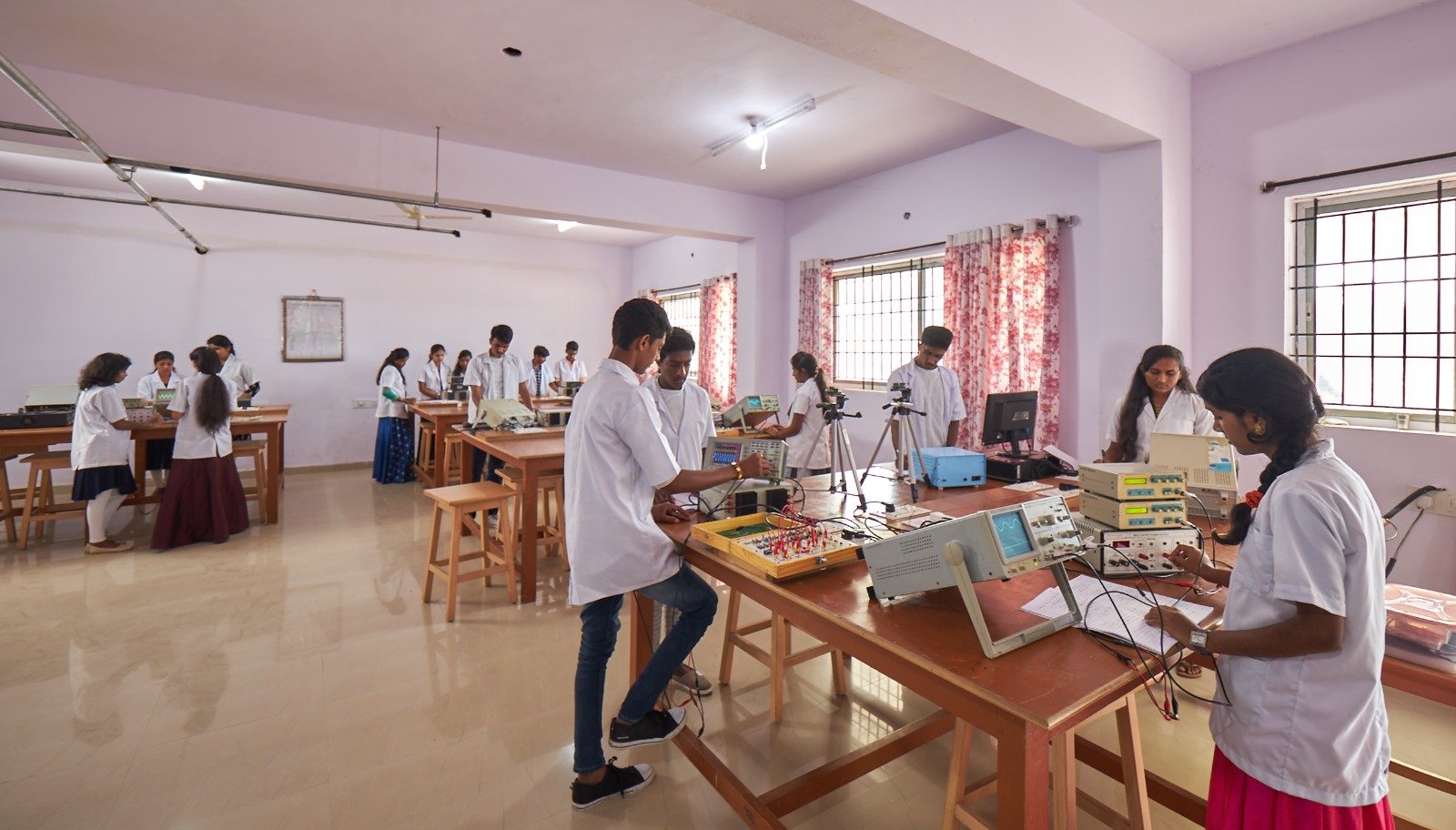
- Department of Physics achieves its mission by trying to evenly represent the underlying sub- disciplines of physics in research and teaching, but also to promote new areas of research, with an emphasis on interdisciplinary and applied research.
- The Department of Physics actively promotes the highest ethical principles in scientific research, critical thinking, openness to social, scientific, technological and educational changes, as well as the working autonomy at the University, both scientific and educational.